
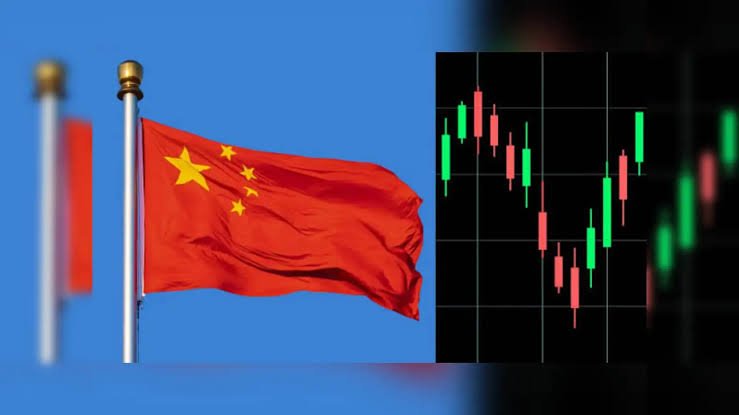
Islamabad, Oct 25,2026: China’s equity market is showing signs of stronger long-term investor participation. Driven by regulatory reforms and measures to improve shareholder returns, institutional funds have significantly increased their share purchases, leading to a sharp rise in 2026 trading activity.
According to the China Securities Regulatory Commission (CSRC), social security funds, annuity funds, insurance institutions and other medium- and long-term investors have made net purchases of more than 600 billion yuan in A-shares since the beginning of 2026. The market value of their holdings of tradable A-shares has increased by 12.5% compared with the end of 2025.
Shanghai Stock Exchange figures also show that stock turnover reached approximately 208.37 trillion yuan during January-September 2026, compared with 122.22 trillion yuan during the corresponding period last year, representing an increase of about 70%. The sharp rise indicates stronger trading activity and broader market participation.
The growing institutional investment comes as Chinese regulators seek to strengthen the equity market through measures encouraging long-term investment, greater shareholder returns and improved access to financing for innovative companies. However, market volatility remains evident, with the Shanghai Composite closing September at 3,842.19 points, below its August closing level of 3,986.30.
Haris Javad, Equity Investment Manager at Syed Faraz Equities, told Wealth Pakistan that the most significant development was the return of patient capital to Chinese equities at a time when authorities were also strengthening market structure and shareholder returns.
“When pension, insurance and other long-term investors increase their exposure, it sends a stronger signal than a short-lived rally driven by speculative flows. It suggests that investors are becoming more comfortable with valuations, liquidity and the broader policy environment surrounding the market,” he said.
Javad said the increasing participation of institutional investors was particularly important because such investors generally operate with longer investment horizons and place greater emphasis on financial stability, corporate performance and sustainable returns.
He noted that a market recovery supported by long-term capital could provide a stronger foundation for investment confidence than one driven mainly by short-term trading activity.
The substantial increase in trading turnover also suggests growing investor interest in Chinese equities, although higher volumes alone do not necessarily indicate an improvement in underlying market fundamentals.
Javad emphasised that the quality of market participation was as important as the volume of transactions, particularly when assessing whether an equity-market recovery could be sustained.
“For a sustainable equity recovery, you want to see liquidity accompanied by stronger institutional ownership, improving corporate fundamentals and greater confidence in market rules. Rising volumes alone are not enough, but when long-term investors are also increasing their positions, the quality of the recovery improves,” he said.
China’s equity-market developments align with broader regulatory efforts to empower institutional investors and improve the functioning of domestic capital markets.
In September, the CSRC outlined plans to improve mechanisms encouraging long-term investment, expand equity-oriented public funds and strengthen the role of institutional capital in supporting market stability.
The regulator has increasingly emphasised the importance of creating an investment environment in which pension funds, insurance institutions and other long-term investors can participate more effectively in equity markets.
Such measures are intended to encourage a more stable investor base and support the development of capital markets capable of meeting businesses’ financing requirements over longer periods.
According to the CSRC, public funds generated approximately 1.74 trillion yuan in profits for investors during the first half of 2026, reflecting the scale of returns reported across the sector during the period.
Regulatory reforms have also placed greater emphasis on improving shareholder returns through dividends and share repurchases.
The CSRC said that over the past two years, dividends and share buybacks by A-share listed companies amounted to more than three times the value of equity financing raised during the same period.
The comparison highlights the increasing attention given to shareholder distributions and the role of listed companies in generating returns for investors.
Javad said the shift towards dividends and share buybacks could have important implications for investor confidence because it encouraged greater attention to corporate earnings, cash generation and capital allocation.
“When companies return more capital to shareholders through dividends and buybacks, it can make the market more attractive to long-term investors. It also puts greater emphasis on earnings quality and capital discipline, which are important for building durable confidence,” he said.
He explained that consistent shareholder returns could make equities more appealing to institutional investors seeking sustainable investment opportunities rather than relying primarily on short-term price appreciation.
The growing emphasis on dividends and buybacks also reflects efforts to strengthen the relationship between corporate performance and investor returns.
Alongside regulatory reforms, Chinese monetary authorities have developed financial facilities aimed at supporting stock-market liquidity and providing additional flexibility to financial institutions and listed companies.
The People’s Bank of China has combined its securities, funds and insurance swap facility with its share buyback and shareholding-increase relending programme under an overall quota of 800 billion yuan.
The arrangements are designed to support market liquidity and facilitate access to financing mechanisms that can be used by eligible financial institutions and listed companies.
These measures form part of a broader effort to improve market functioning and provide support during periods of financial uncertainty.
However, the availability of liquidity-support facilities does not by itself guarantee higher equity valuations or sustained market gains, as corporate profitability and investor expectations remain important determinants of market performance.
China is also seeking to make its capital markets more attractive to innovative and high-quality enterprises.
Under its financial-sector development plans, regulators intend to introduce more inclusive listing, refinancing and merger rules while encouraging innovative companies to use domestic equity markets to raise capital.
The proposed changes could help improve financing opportunities for businesses pursuing technological innovation, industrial upgrading and expansion into new areas of economic activity.
By facilitating greater access to equity financing, the reforms could also strengthen the role of capital markets in supporting investment and long-term economic development.
For international investors, China’s equity market developments carry significantly weight, reflecting the country’s economic scale and the global prominence of its listed companies across manufacturing, technology, and financial services.
Stronger institutional participation, improved shareholder returns and more predictable market regulations could contribute to a more stable investment environment, although market performance will continue to depend on economic conditions and company-specific fundamentals.
Javad said the durability of China’s equity-market revival would ultimately depend on whether listed companies could translate policy support and improved investor participation into stronger financial performance.
He stressed that institutional buying and supportive regulatory measures were encouraging developments, but sustained confidence required continued improvements in earnings and balance-sheet strength.
“Policy support can stabilise sentiment, but a lasting equity-market recovery needs improving earnings, stronger balance sheets and confidence that companies can continue creating value. If those fundamentals strengthen alongside institutional participation, the recovery can become much more durable,” he said.